
COLLECTION
#008 2/2
2026.03.12
「変わり続ける。変わらないために」
SS26テーマ「Welcome Change」に込められた意志 2/2
Welcome Change:
Evolving to Remain Unchanged
The Philosophy Behind SS26 (Part 2/2)
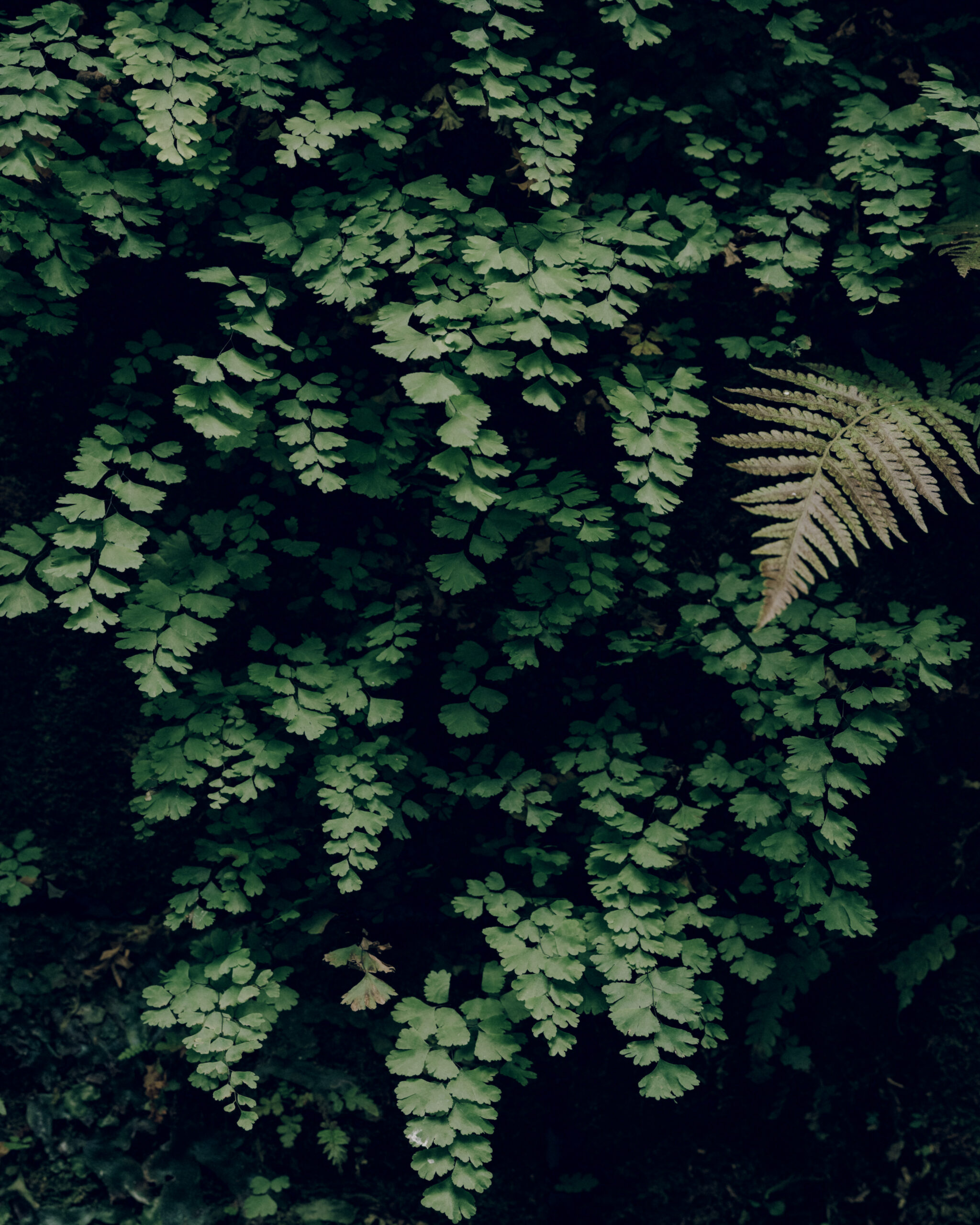
今の時代、変化は避けられないもの。不可抗力に振り回され、市場がめまぐるしく変わる中で、目の前から消えていくもの、新たに生まれるものが日々現れています。そんな中で、ヘッドウェアブランドは未来にどんな価値を提供できるのでしょうか? その答えを探るために、KIJIMA TAKAYUKIはチャールズ・ダーウィンの言葉に立ち戻りました。
「生き残るのは、最も強い者でも最も賢い者でもない。変化する者だけが生き残る。」
この言葉を起点に都市と自然への往来をテーマにSS26のプロダクトを撮り下ろす試みをジャーナルで実践すること。フォトグラファーのIan Lantermanさんと横須賀から離島・猿島へと向かいました。後編では、前編で紹介した「変化の3つの解釈」——伝統と革新の融合、時間の流れの視覚化、自然と都会の調和——が、猿島という場所でどう体現されたのか。『Welcome Change』という言葉がどう撮影に紐づいていったのか紀行文を記します。
撮影地に猿島を選んだものの、そもそも猿島とは、一体どういう場所なのだろう。最初頭に浮かんだのはそのことだ。今でこそ「ジブリのような世界観」と称され、緑豊かなフォトスポットとして知られているこの地は、その実、現地の静けさには幾重もの奥行きのある時間やさまざまな思いが沈黙の中で、横たわっていた。
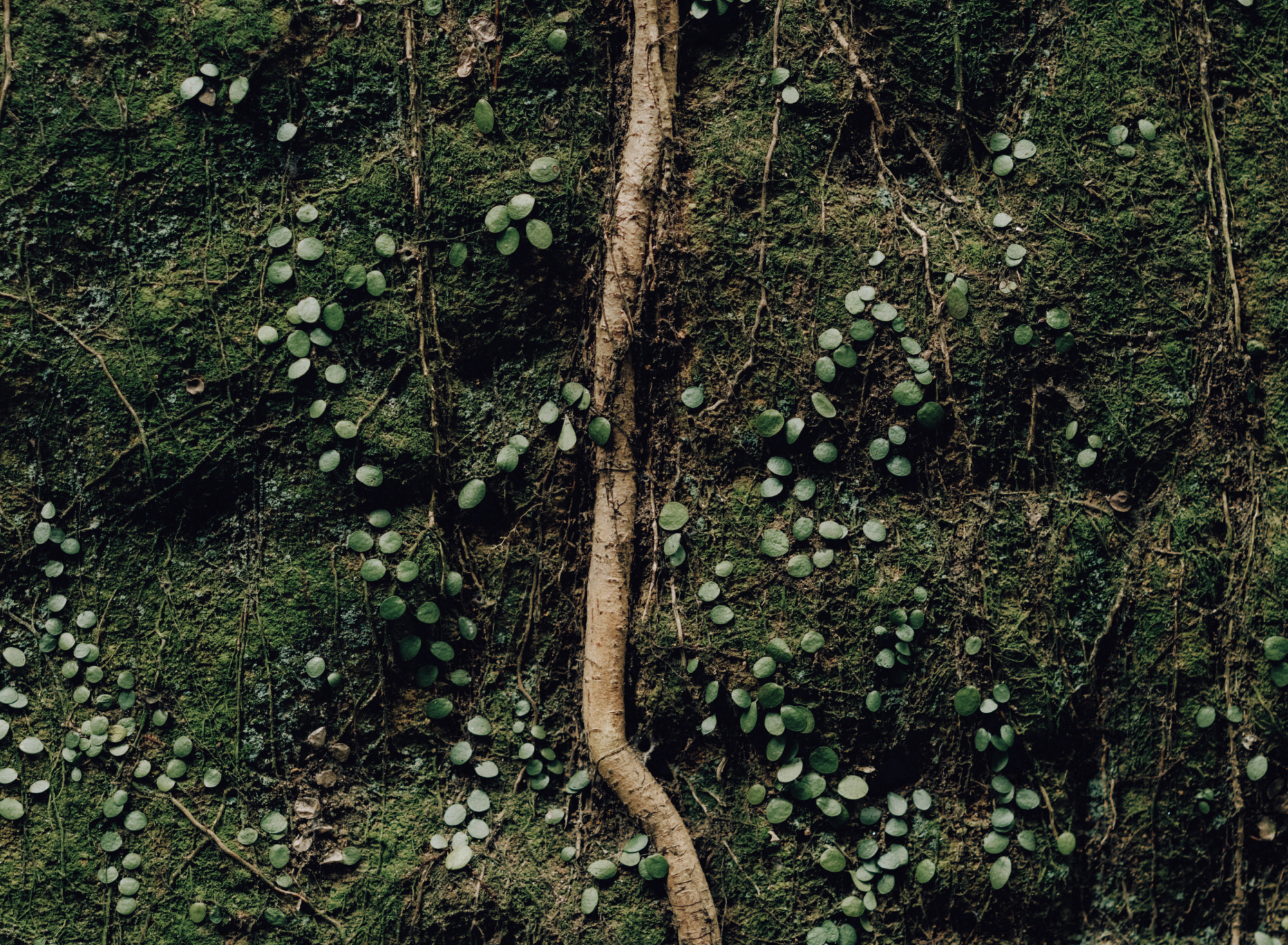
ーー幕末から明治にかけて築かれたこの島は、かつて東京湾を守るための「鉄壁の要塞」だった。しかし、一度も実戦で火を吹くことはなく、戦後は放置され、やがて冷たく硬いレンガの隙間を湿った苔や蔦が覆い、砲台跡はシダ植物の揺りかごへと姿を変えていった。「国を守るための意志」が役目を終え、自然の浸食という経年変化を受け入れた場所。 だからこそ、独特の優しさと、静かな緊張感が違和感なく同居しており、人々を魅了してやまないのだろう。
Change is unavoidable these days. The market shifts constantly, things disappear in front of us, new things emerge every day—we’re tossed around by forces we can’t control. So what value can a headwear brand offer to the future? To find an answer, KIJIMA TAKAYUKI returned to the words of Charles Darwin:
“It is not the strongest of the species that survives, nor the most intelligent; it is the one most adaptable to change.”
Using this as a starting point, we set out to photograph the SS26 collection around the theme of moving between city and nature. Photographer Ian Lanterman and I traveled from Yokosuka to Sarushima, a remote island off the coast. In Part 2, we look at how the “three interpretations of change” introduced in Part 1—the fusion of tradition and innovation, visualizing the passage of time, and harmony between nature and the city—played out on Sarushima. This is the story of how “Welcome Change” became woven into our shoot.
Though we had chosen Sarushima as our location, a question arose almost immediately: What kind of place is this island, really? Today, it is known as a lush photo spot with a “Studio Ghibli-like atmosphere.” But beneath the surface tranquility lies a silence layered with time—a silence that holds countless histories and unspoken thoughts.
Built during the late Edo and Meiji periods, this island once served as an “impregnable fortress” guarding Tokyo Bay. Yet it never fired a shot in actual combat. After the war, it was abandoned. Over time, damp moss and ivy covered the cold, hard brick, and the old gun emplacements became cradles for ferns. Here, the “will to protect a nation” completed its duty and accepted the erosion of nature as a form of aging. Perhaps this is why the island possesses both a unique gentleness and a quiet tension—qualities that coexist without contradiction, captivating all who visit.
時間の痕跡が残る猿島で浮かんだ「問い」
Questions That Arose on an Island
Where Time Leaves Its Trace
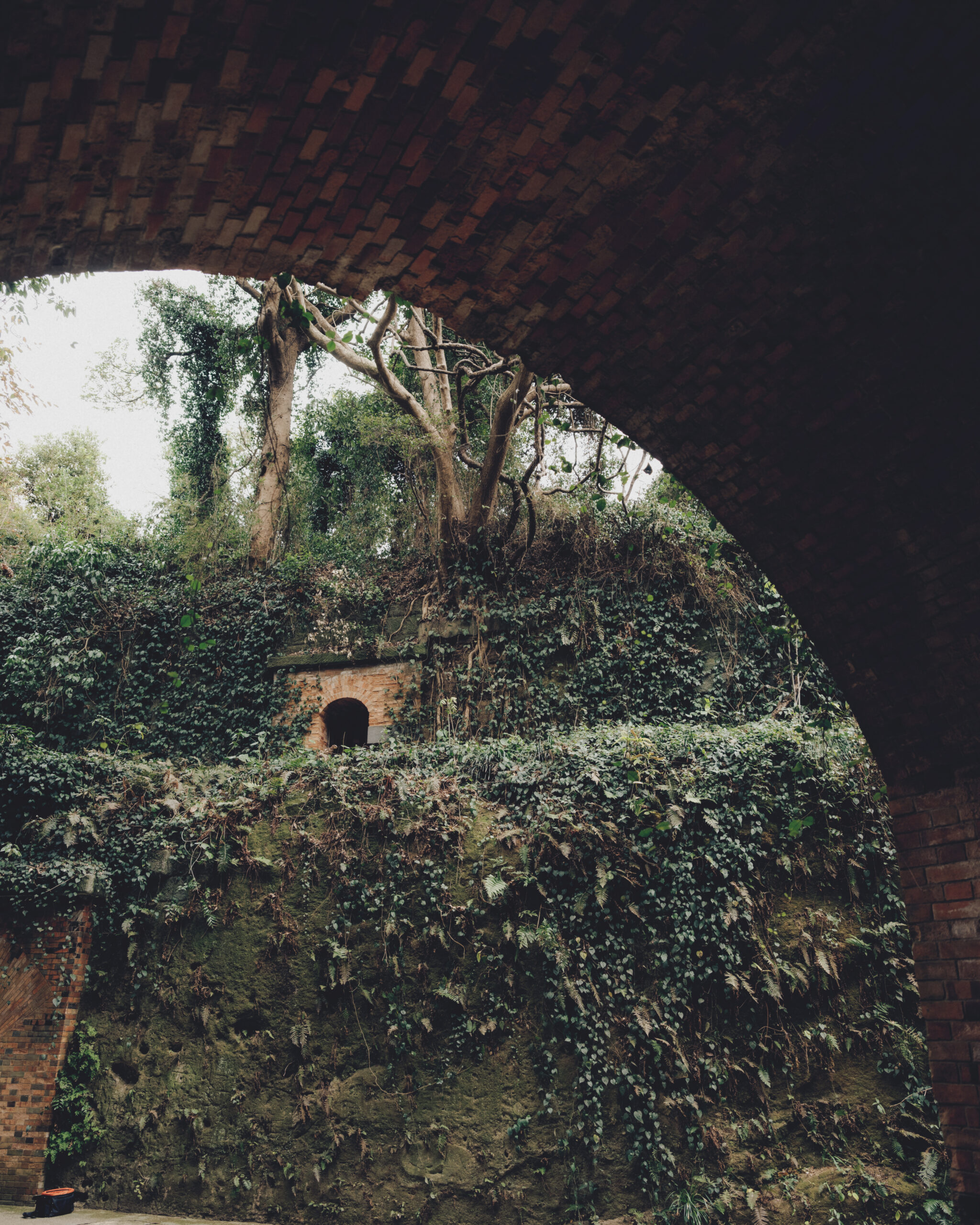
当日の撮影クルーは6人。我々は全員猿島に到着するのは初めての経験。アメリカ・ニューヨーク生まれでフォトグラファーのIan Lantermanさんも長年東京を拠点に活動しているが、来る機会がなかったそう。Ianさんは現場に到着してほどなくして「実際にここは戦争に使われた舞台なんですか?」と歩きながら筆者に尋ねた。「いいえ。ここが舞台になったことはないそうです」と答えたら、「本当によかったです」とぼそっと実感を込めて呟いていた。
鉄壁の要塞は、体感すると思った以上だった。戦禍を免れ、戦後に平和が訪れそして今ジブリのような世界観と観光資源となった島の特殊な空気が流れている。
ーー団体の訪問者とは別のタイミングで動いていた我々は、静けさの中、『ここで撮りましょうか』となるまでふさわしい場所を追い求め、最適な瞬間を待った。脳内にイメージは既にあり、いざ準備が整うと撮影は淡々とはじまっていく。
Our crew that day consisted of six people, all visiting Sarushima for the first time. Even Ian Lanterman, a New York-born photographer who has been based in Tokyo for years, had never had the chance to come. Shortly after arriving, he asked me as we walked, “Was this place actually used in the war?” I replied, “No, it was never a battlefield.” He quietly murmured, almost to himself, “I’m really glad to hear that.”
The sense of an impregnable fortress was more powerful than I had imagined. True to that impression, the island had been spared from the ravages of war. Today, a singular atmosphere pervades the place—part Ghibli wonderland, part tourist attraction, but something more ineffable beneath it all.
Moving separately from the tour groups, we searched in the quiet for the right spot, waiting for the optimal moment. The image was already forming in our minds, and once preparations were complete, the shoot began calmly and deliberately.
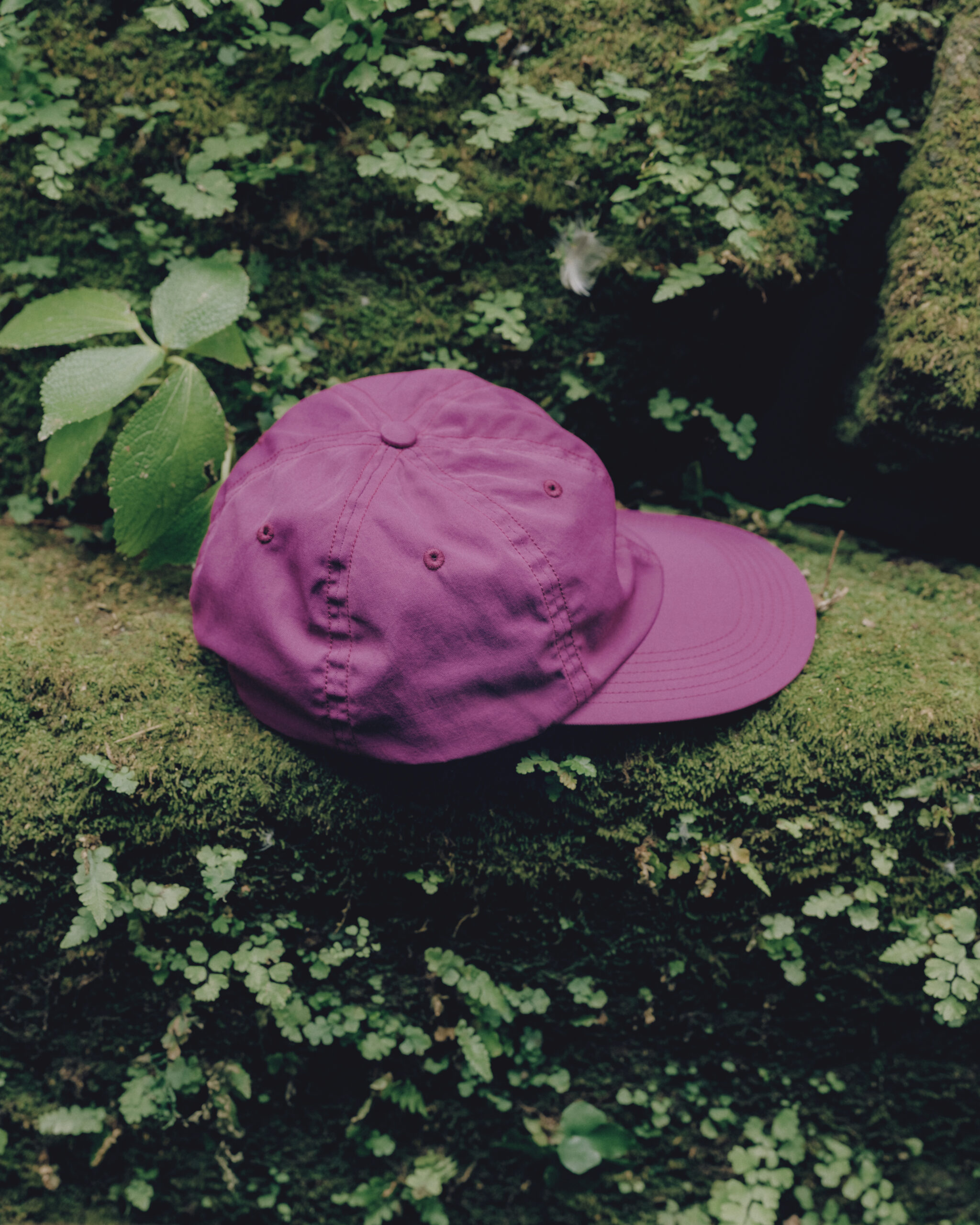
DRY TWILL ELASTIC BACK 6PANEL CAP (No.MYYY261327)
ポリエステルコットンリネンツイルストレッチ素材を使用した6パネルキャップ。ドライタッチで、二度のタンブラー加工によるナチュラル感が特徴。吸水速乾性があり、バックゴムフィットで調整が容易。「定番のキャップだが、ベルトなしのゴムシャーリング仕様。被り口もフィットしていて、金具が外に出ているとかごちゃごちゃしているのが嫌な人にもいい。アクティブなシーン、ハイキングやレジャーに向いている」アウトドアの機能性を持ちながら、都市生活のスタイリングに抵抗なく馴染む。まさに今季のテーマを体現している。「年々、汗をかいたものを瞬時にドライな状態にする機能が求められている」と木島が語るように、このキャップも洗濯可能な設計になっている。
https://kijimatakayuki.shop-pro.jp/?pid=190122562
This 6-panel cap is crafted from polyester-cotton-linen twill stretch fabric. It features a dry touch and a natural texture, achieved through double-tumbler processing. With moisture-wicking and quick-drying properties, the back elastic fit allows for easy adjustment. “It’s a classic cap, but with an elastic shirring design instead of a belt. The fit is snug around the head, and it’s perfect for people who dislike exposed hardware or excess detail. It’s ideal for active scenes—hiking, leisure, outdoor activities.” While offering outdoor functionality, it integrates seamlessly into urban styling. It is the very embodiment of this season’s theme. “Year by year, there’s a growing demand for fabrics that instantly dry when you sweat,” says Kijima. True to this, the cap is machine washable.
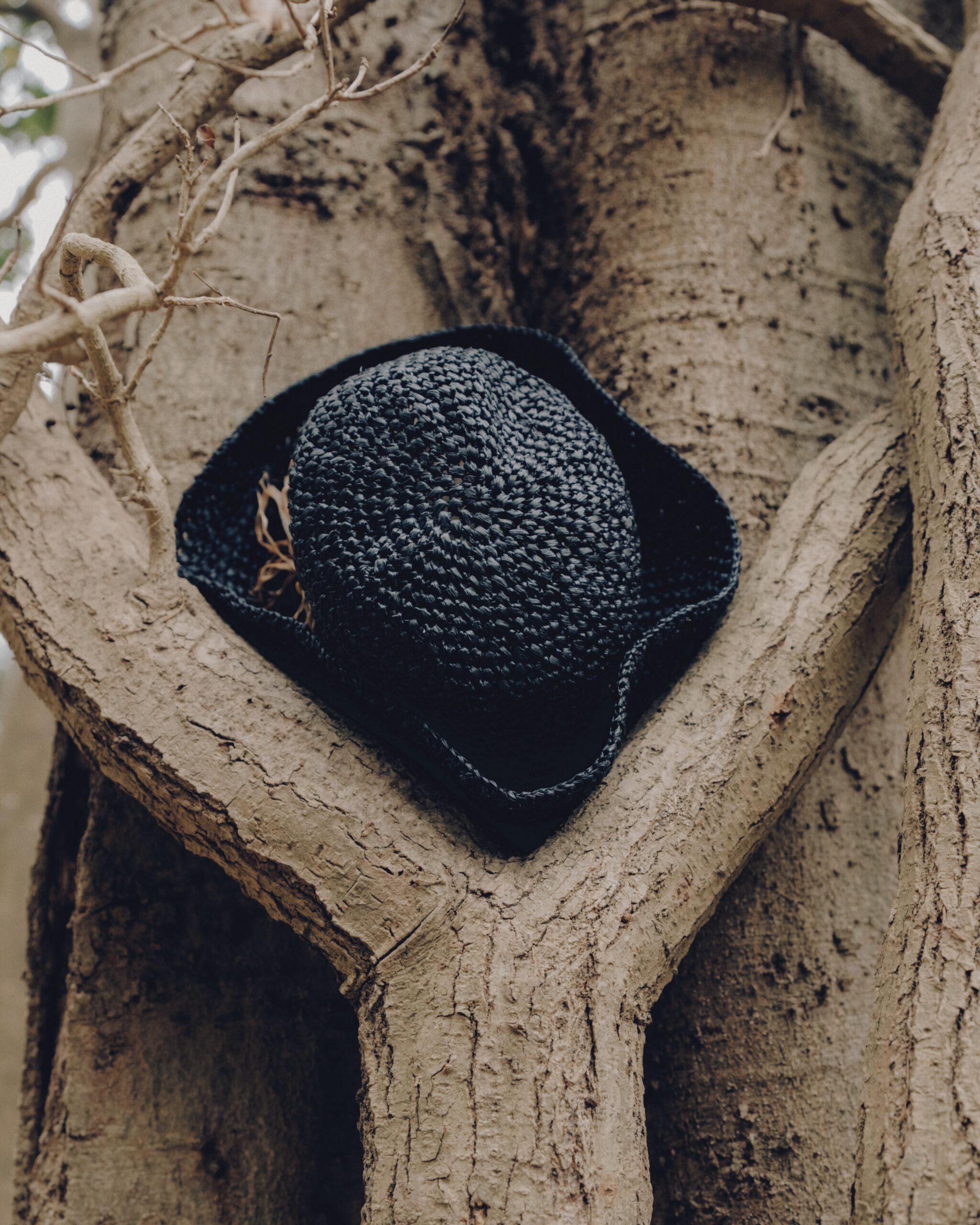
RAFFIA BOWLER HAT (No.WYYY261348)
ラフィアかぎ編み帽体を使用したボーラーハット。ラフに結んだラフィアヤーンのトリミングが特徴。内側のドローコードで被りの深さを調整可能。「メンズのボーラーハットをベースにしたオーバーサイズ。頭の小さい方が大きめに被ってオーバーになるのがかわいい。ラフィアのトリミング。素材を組み合わせて編む、原材料を装飾として巻いている」クラシックなスタイルに、現代的な解釈が加わっている一品。
https://kijimatakayuki.shop-pro.jp/?pid=189780872
This bowler hat is crafted from crochet-knit raffia, accented by a trimming of roughly knotted raffia yarn. An internal drawcord allows for easy adjustment of the crown depth. “The design is an oversized take on a classic men’s bowler hat,” the brand explains. “It’s intended to look charming on someone with a smaller head, creating a deliberate, oversized silhouette. For the trimming, we used raw raffia yarn—essentially using the raw material itself as the decoration.” It is a piece that adds a contemporary perspective to a timeless, classic style.
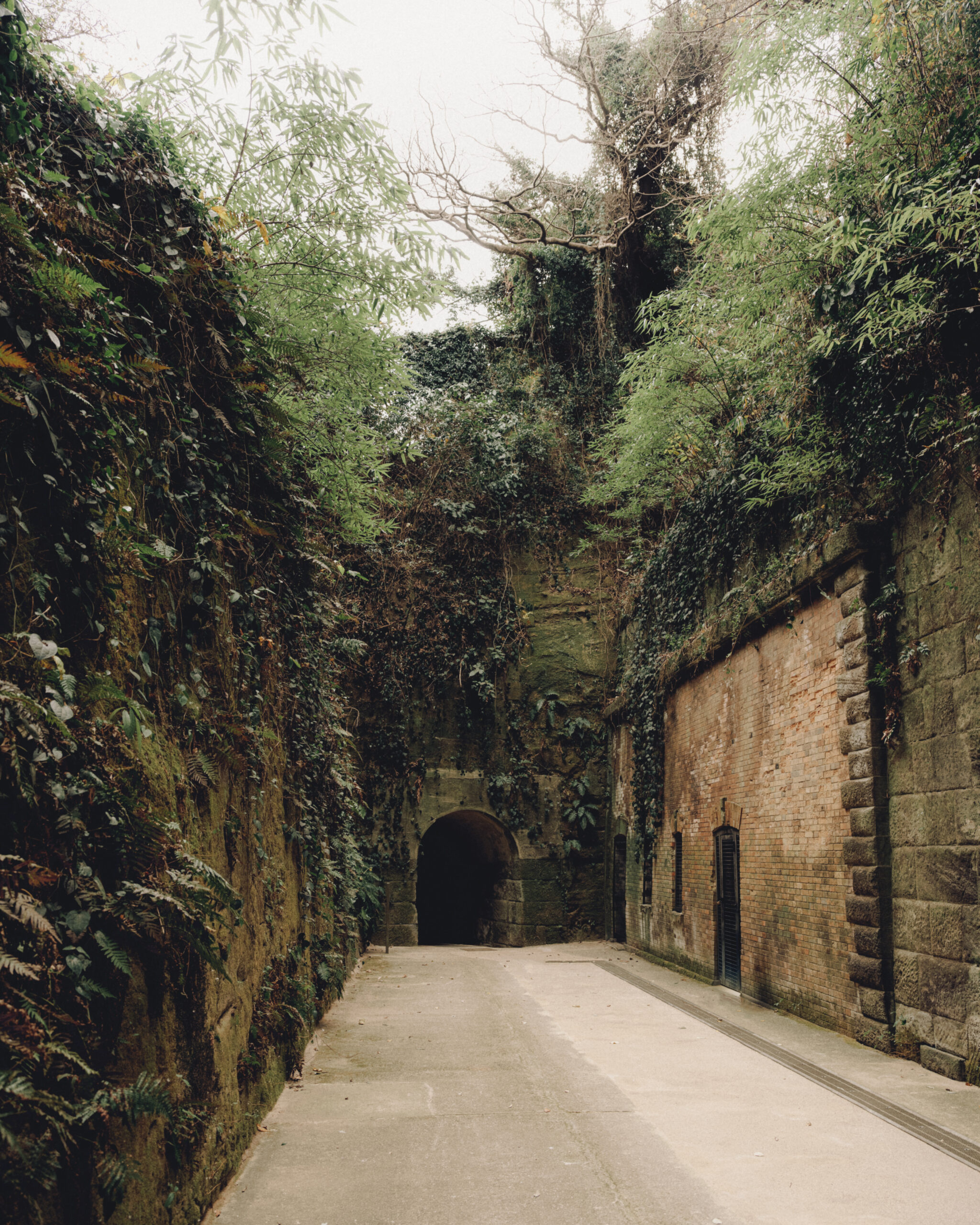
撮影中、何度も風が強く吹きつけてくる。木が揺れるたびに、不思議とかつてここには、国を守ろうとした強い意志があったことを感じさせる。そして一度は忘れられたけれど、今はその大砲の跡にまとわりつくシダ植物が新しい命を育み、朽ちることのない『時間の痕跡』を暗示しているようだった。アイテムだけではなく、Ianさんはその機微を察知してシャッターを切りとる。
都会のスタジオでの撮影では、決して撮れない島特有の空気感や間の「呼吸」。時間が止まったかのような閑散とした1月の猿島で光の変化を待ち、持ってきたアイテムたちが馴染む場所を追い求め、感度を高める贅沢なセッションとなっていった。
Ianさんは、特に生い茂る原生林と、硬い赤レンガの朽ちたテクスチャーの境界線に何度もレンズを向けていた。モデルのAlbaが新作のスカーフ付きハットを被り、レンガの壁に佇む。暗闇から差し込む自然光が、帽子に繊細な陰影を落とす。そしてトンネルを抜けたところ、光の出入口・モデルとして声をかけた写真家の相澤有紀を立たせることで、陰影が美しく浮かび上がる。その瞬間、最新のプロダクトが、本人がずっとこれまで被ってきたかのように風景に自然と馴染んでいくのが見えた。
「変化を受け入れること」そのこと自体が、たまたま撮影地を猿島と結びつける契機になったのかもしれない。深読みしすぎかもしれないが、感覚を研ぎ澄まし考えるともなしに考えれば無意識と無意識が呼応して、一つの向かうべき着地点へといずれたどり着いていく。
ーー歴史を振り返れば、日本列島の多くの場所が焼け野原となり、やがて現在まで復興を遂げた。しかしこの島は違う。戦禍を免れ、破壊されることなく、ただ静かに役目を終え、自然へと還っていった。守られることで訪れた変化。その稀有な歴史を噛み締めながら、私たちもまた、“守ること”と“変化すること”について考えた。
During the shoot, strong winds repeatedly swept across the island. Each time the trees swayed, I felt—strangely, inexplicably—the presence of a strong will that once existed here, a will to protect the nation. And though the island was once forgotten, the ferns now clinging to the remains of the old cannons seemed to nurture new life, hinting at “traces of time” that refuse to decay. Ian captured not only the product but also these subtle resonances with his shutter.
There is an “air” and a “breathing rhythm” unique to this island—qualities impossible to replicate in a city studio. Waiting for shifts in light on this quiet, deserted island in January, we sought out places where the items would naturally belong. It became a luxurious session, one that heightened our senses.
Ian repeatedly turned his lens toward the boundary between the overgrown primordial forest and the crumbling texture of the hard red brick. Model Alba stood against a brick wall wearing the new scarf-attached hat, natural light streaming from the darkness to cast delicate shadows on the piece. Then, at the exit of a tunnel, we positioned photographer Yuki Aizawa—whom we had invited to model—in the play of light and shadow. At that moment, the latest product seemed to settle into the landscape as if it had always belonged there, as if the wearer had been wearing it all along.
Perhaps it was “accepting change” itself that led us, almost by chance, to Sarushima. It may sound like a stretch, but when you sharpen your senses and think without forcing thought, the unconscious responds to the unconscious—and eventually, you arrive at a single, inevitable destination.
Looking back through history, many places across the Japanese archipelago were reduced to scorched earth, only to rebuild and recover over time. But this island is different. Spared from destruction, it quietly finished its role and returned to nature. Change arrived not through violence, but through protection. As we reflected on this rare history, we found ourselves contemplating what it means to “protect” and to “change.”
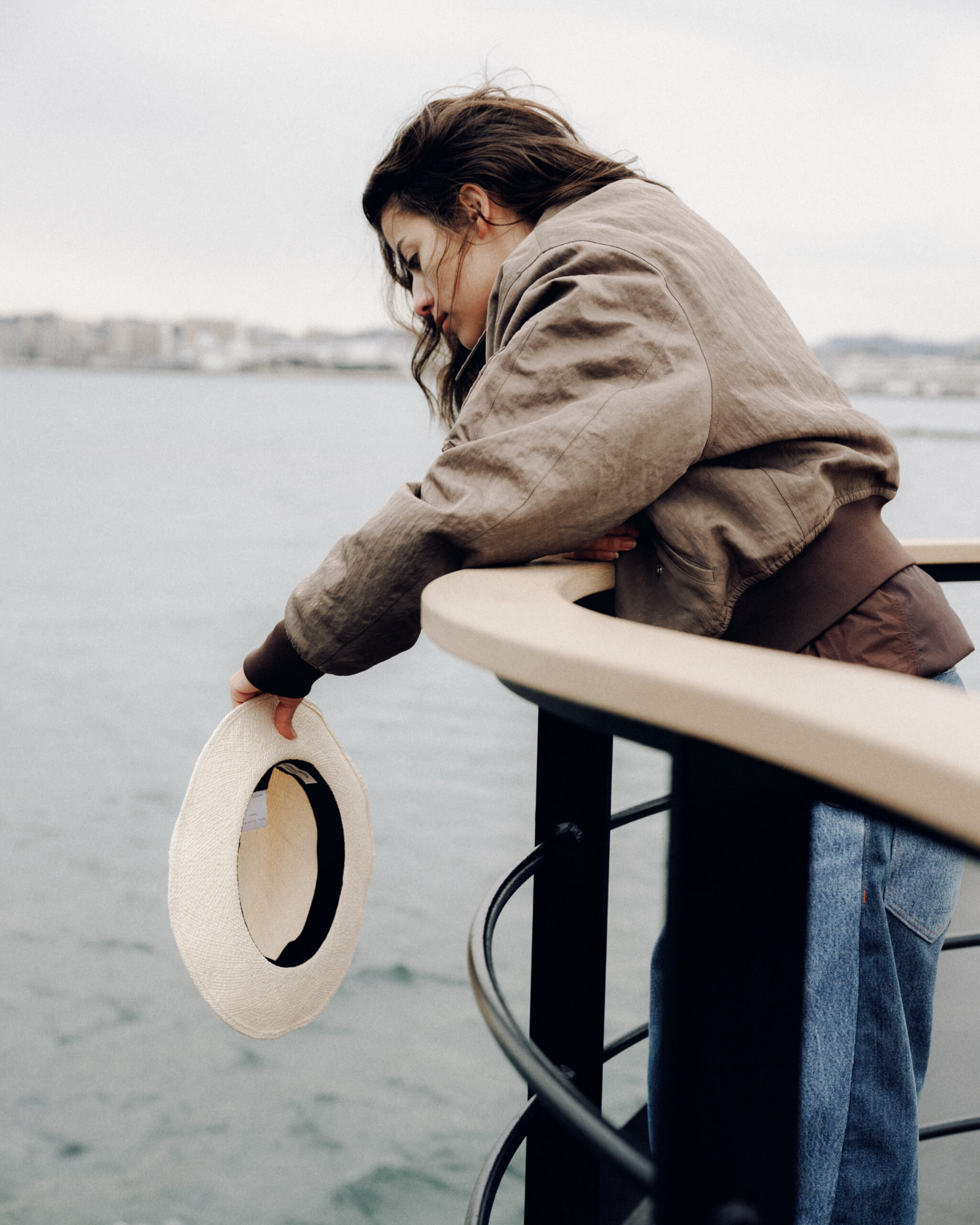
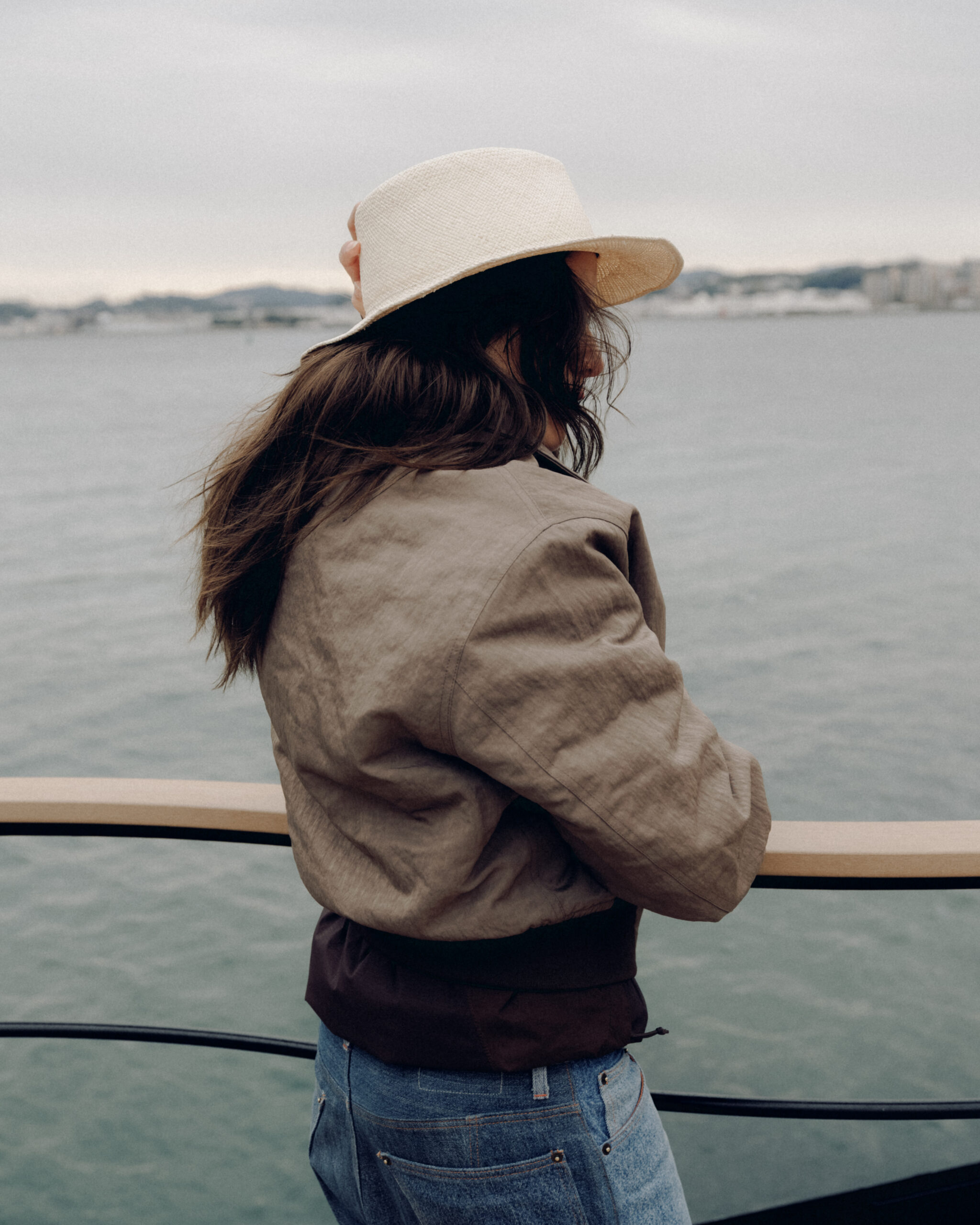
FINE RAFFIA PORKPIE HAT (No.WYYY261346)
ファインラフィア帽体を使用したポークパイハット。ブリムエッジに変形可能なプラスチックワイヤー入り。自社アトリエの職人によるハンドメイド。「ティアドロップ型のハット。ブリムのエッジにプラスチックワイヤーが入っていて、波打つニュアンスもつけられる。ラフに使ってもブリムの端が割れない。市場の流れを合わせながら」機能性と遊び心の両立。そして何より、使う人の個性に馴染んでいく柔軟性。
https://kijimatakayuki.shop-pro.jp/?pid=189780868
This porkpie hat uses a fine raffia body. The brim edge contains a deformable plastic wire. Handmade by artisans at the brand’s own atelier. “It’s a teardrop-shaped hat. The plastic wire along the brim edge lets you add a wavy nuance. Even with rough use, the brim edge won’t crack. We’re adapting to market trends while maintaining our vision.” A balance of functionality and playfulness. And above all, the flexibility to adapt to the wearer’s individuality.
簡単には答えに辿り着かない
「問い」を抱え続けること
Carrying Questions That Have No Easy Answers
生物学に「動的平衡」という考え方がある。人間が「変わらない自分」でいるためには、自分自身、実は絶えずミクロレベルで変化し続けてるということだ。少しだけ発想を飛躍して考えてみる。それは激動の時代の中で、自分たちの美学や佇まいを貫くこと。あらがうことではなく、しなやかに「Welcome Change」を体現すること、とも捉えることができはしないだろうか。 猿島という不思議な磁場に身を委ね、強い風の中で自然と一体になる時間を過ごす。遠い昔に思いを馳せながら、過ぎ去った過去やそれでも消えない時間の痕跡。そして残されて積み重なる景色を味わった。
「とても不思議な場所。来ることができてよかった。感動しました」帰り際、トンネルから戻り、船着場へと向かう道中、Ianさんは、ちょうどギリギリ聞こえるくらいのボリュームで言葉をこぼしていた。いろんな時間の痕跡を経て辿り着いた猿島。和やかに進んだ撮影の合間に、簡単には答えに辿りつかない大切な「問い」を抱えて、帰りの船に乗り込んだ。
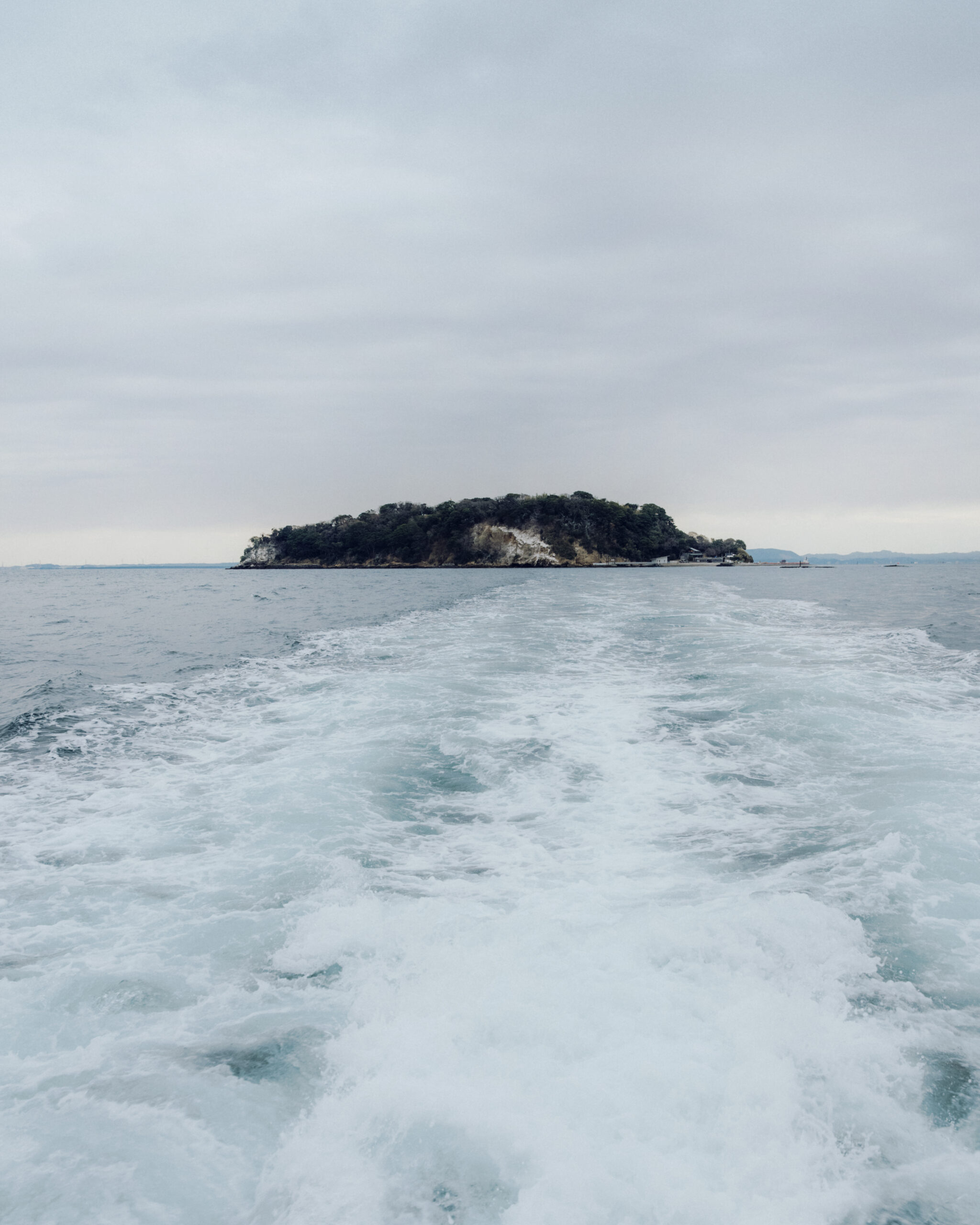
遠ざかる猿島を眺めながら、誰もが沈黙に耳を澄ませた。 守るべき価値と、変わっていく世界。その波に揺らされ、潮風を浴びる。ラフィアの帽子が風を受けてなびく。変わらない自分でいるために、自分たちもまた変化を続けていくのだろう。撮影を通じた小さな冒険が密かに教えてくれた。
In biology, there is a concept called “dynamic equilibrium.” For a human being to remain “unchanged,” they must, paradoxically, be constantly changing at the micro level. Allow me to extrapolate slightly. In a turbulent era, this may also mean staying true to one’s aesthetics and posture—not by resisting change, but by gracefully embodying “Welcome Change.” We entrusted ourselves to the strange magnetism of Sarushima, spending time becoming one with nature in the strong wind. We thought of the distant past, of time gone by, and of traces of time that refuse to disappear. We savored the landscape that remains, layer upon layer.
“It’s a very mysterious place. I’m so glad we were able to come here. I was truly moved,” Ian said quietly on the way back to the dock after leaving the tunnel—his voice just barely audible. Having arrived at Sarushima through so many traces of time, we boarded the return boat carrying important questions—questions with no easy answers—encountered during the peaceful progression of the shoot.
As we gazed at the receding island, everyone listened to the silence. The values we must protect, and the world that continues to change. Rocked by those waves, bathed in the sea breeze. The raffia hat fluttered in the wind. To remain unchanged, we too must continue to change. This small adventure through photography taught us that, quietly.
Edit, Text, Translation & Music selection: Hiroyoshi Tomite
Photography: Ian Lanterman
Model: YUKI AIZAWA (MEN) / Alba (WOMEN)
SHARE


OTHER ARTICLES
-
 #008 1/22026.02.26
 -
 #007 2/22025.10.22
 -
 #007 1/22025.10.09
 -
 #006 2/22025.04.22